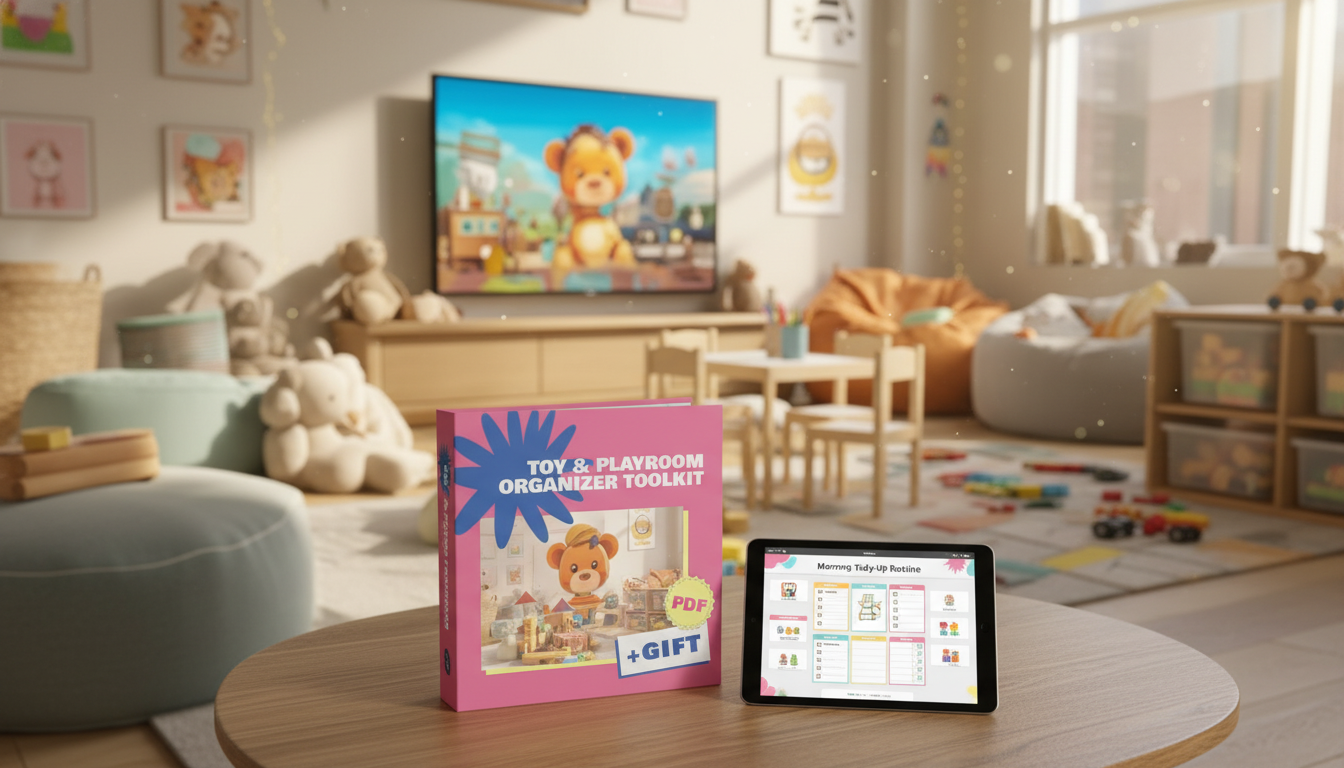
A playroom can feel like it “resets” to messy in minutes—especially when toys don’t have clear homes, cleanup takes too many decisions, and storage looks cute but doesn’t work day-to-day. A printable, repeatable system can make the difference: simple zones, clear categories, and quick routines that kids can follow without a long lecture (or a total room makeover). For more guidance, see How to Declutter Kids Playroom: Printable Checklist – Kate Decorates.
If you want a ready-to-use set of pages to map the space, choose categories, plan labels, and keep routines consistent, the Toy & Playroom Organizer Toolkit (Printable Digital Guide) is designed to help you set up a system once—and maintain it with short resets. For further reading, see Kids Room Organization: Your Complete Guide – Clutter Keeper®.
Before buying new bins, take 20 minutes to observe what your kids actually do in the room. This “toy map” is a quick snapshot of play habits, pain points, and what needs to be easiest to reach.
When you keep the goal small and visible, it’s easier to maintain momentum—and easier for other caregivers to follow the same plan.
Decluttering goes better when kids can predict what’s happening and feel some control. Instead of asking, “Do you want to get rid of this?” for every single toy, use a fast structure and limit decisions.
For safety reminders—especially for items with small parts or age guidance—use reputable resources like the American Academy of Pediatrics toy safety guidance.
The best storage isn’t the prettiest—it’s the easiest to use correctly, every day. Aim for containers that match how the toy is played with and how quickly you need it put away.
| Toy category | Best container | Label style | Where it lives |
|---|---|---|---|
| Blocks & bricks | Open bin or drawer with divider | Picture + word | Lower shelf; near building surface |
| Small figures & accessories | Lidded box with small cups/zip pouches | Word + icon | Mid shelf; “sets” zone |
| Art & crafts | Portable caddy + file folders for paper | Word labels | Closet or upper shelf; adult access |
| Puzzles & board games | Vertical rack or magazine files | Word labels | Eye-level shelf; family access |
| Plush toys | Large breathable bin/hamper | Picture label | Corner or under-bench storage |
| Vehicles & tracks | Long bin + smaller bag for connectors | Picture + word | Near floor play area |
If you’re aligning toy expectations with age and attention span, the CDC developmental milestones can be a useful reference when deciding how many steps a cleanup routine should include.
For a streamlined, print-and-go approach, the Toy & Playroom Organizer Toolkit (Printable Digital Guide) pairs the declutter steps with zone planning and routine pages, so the system stays consistent.
If you’re also organizing beyond the playroom, these printable guides can complement a whole-home reset: Pet-Proof & Pretty: The Home Décor Checklist and Accent Wall Magic Checklist.
Keep only what comfortably fits in labeled “homes” with a little space to spare, so putting toys away is easy. Use rotation bins for the rest, and keep a small favorites basket accessible for daily play.
Use fewer categories, open bins for daily-use toys, and clear labels (pictures help younger kids). Pair that with a consistent cleanup order and a short daily timer so the routine becomes automatic.
Choose lidded containers with dividers, or small pouches/cups stored inside a larger box. Sort by set or category, label clearly, and place them on mid-level shelves to reduce spills and dumping.






Leave a comment