Pet-Proof & Pretty: A Home Décor Checklist for Dog- and Cat-Friendly Living
A stylish home and a happy pet can coexist with a few smart décor choices. The goal isn’t to “pet-proof everything”—it’s to make targeted swaps that stand up to claws, fur, drool, zoomies, and the occasional accident, while still feeling like your space. Use the checklist below to focus on durable materials, safer styling habits, and simple maintenance routines that reduce scratches, stains, shedding, and toppled décor—without sacrificing the look.
Start With the Three Pet-Proof Principles
- Durability first: prioritize scratch-resistant, washable, and stain-hiding surfaces where pets spend time (sofas, rugs, entryways, and favorite nap corners).
- Safety always: remove choking hazards, secure cords, and avoid décor that can tip, shatter, or tangle around paws, tails, or necks.
- Cleanability by design: pick finishes and textiles that tolerate frequent vacuuming, wiping, and laundering—because “easy to clean” is a daily quality-of-life upgrade.
Room-by-Room Checklist: What to Change, What to Keep
Think of this as a quick walk-through. Keep what’s working; upgrade only what repeatedly gets scratched, stained, chewed, or knocked over.
Room-by-Room Pet-Friendly Décor Swaps
| Room/Zone |
Common décor risk |
Pet-friendly swap |
Quick maintenance habit |
| Living room |
Snags on woven upholstery |
Performance fabric, tight weave, or slipcover |
Lint-roll + vacuum weekly (crevice tool for edges) |
| Entryway |
Dirty paw prints on light rugs |
Low-pile, washable runner in mid-tone pattern |
Shake out daily; launder on a set schedule |
| Bedroom |
Fur on bedding and throws |
Washable duvet cover + dedicated pet throw |
Swap/rotate throws every few days |
| Office |
Chewed cords and toppled accessories |
Cord covers + lidded organizers + weighted décor |
Cable check during weekly tidy |
| Dining |
Chipped table legs and chair scratches |
Hard-wearing finish + chair leg protectors |
Wipe after meals; spot-check corners |
Fabrics, Rugs, and Upholstery That Hold Up
Pet-Safe Styling: Plants, Candles, and Small Décor
- Plants: confirm pet safety before bringing greenery home. When in doubt, skip it or keep it fully out of reach. The ASPCA Toxic and Non-Toxic Plants list is a reliable place to check common houseplants.
- Candles and diffusers: use flameless candles for the same cozy glow with fewer risks. Be cautious with essential oil diffusion around pets unless cleared by a veterinarian and used with strong ventilation and pet-free access.
- Breakables: display on higher shelves; use museum putty or quake gel under frames and vases to reduce tipping from tail swishes and curiosity bumps.
- Cords and strings: secure blind cords and decorative string lights; avoid tassels and long macramé fringe in pet pathways, where they can invite chewing or tangling.
Scratch, Shed, and Spill Hotspots (and How to Prevent Them)
- Scratching: offer multiple scratching surfaces (vertical and horizontal). Put one right next to the most-targeted furniture edge, then reward use. If a piece is a repeat victim, add a protector panel or deterrent texture while the new habit forms.
- Shed control: brush regularly; place washable throws where pets lounge; keep a handheld vacuum or rubber broom where you’ll actually use it. For general pet-home hygiene tips and routines, the American Kennel Club has practical guidance.
- Spills and accidents: use enzyme cleaners suited to the surface and treat quickly. Consider a washable rug layer in the highest-risk area (near the back door, food bowl, or litter box route).
- Floor protection: use felt pads under furniture; keep nails trimmed; add runners in high-traffic pet routes to reduce micro-scratches and make vacuuming predictable.
A Simple Weekly Reset Routine for a “Pretty and Lived-In” Home
- 10-minute daily reset: scoop toys into a dedicated basket; shake throws; quick sweep/vacuum of the main pet path.
- Weekly: vacuum upholstery and baseboards; wash throws and covers; wipe doors, trim, and lower cabinets where nose smudges appear.
- Monthly: launder pillow covers; rotate rugs; check furniture legs, scratching posts, and cord covers for wear.
- Seasonal: deep clean under sofas and beds; refresh entryway mats; reassess décor placement as pets age or habits change. For behavior and home-living resources, Humane World for Animals is a helpful reference.
Printable Checklist to Keep on the Fridge (Digital Download)
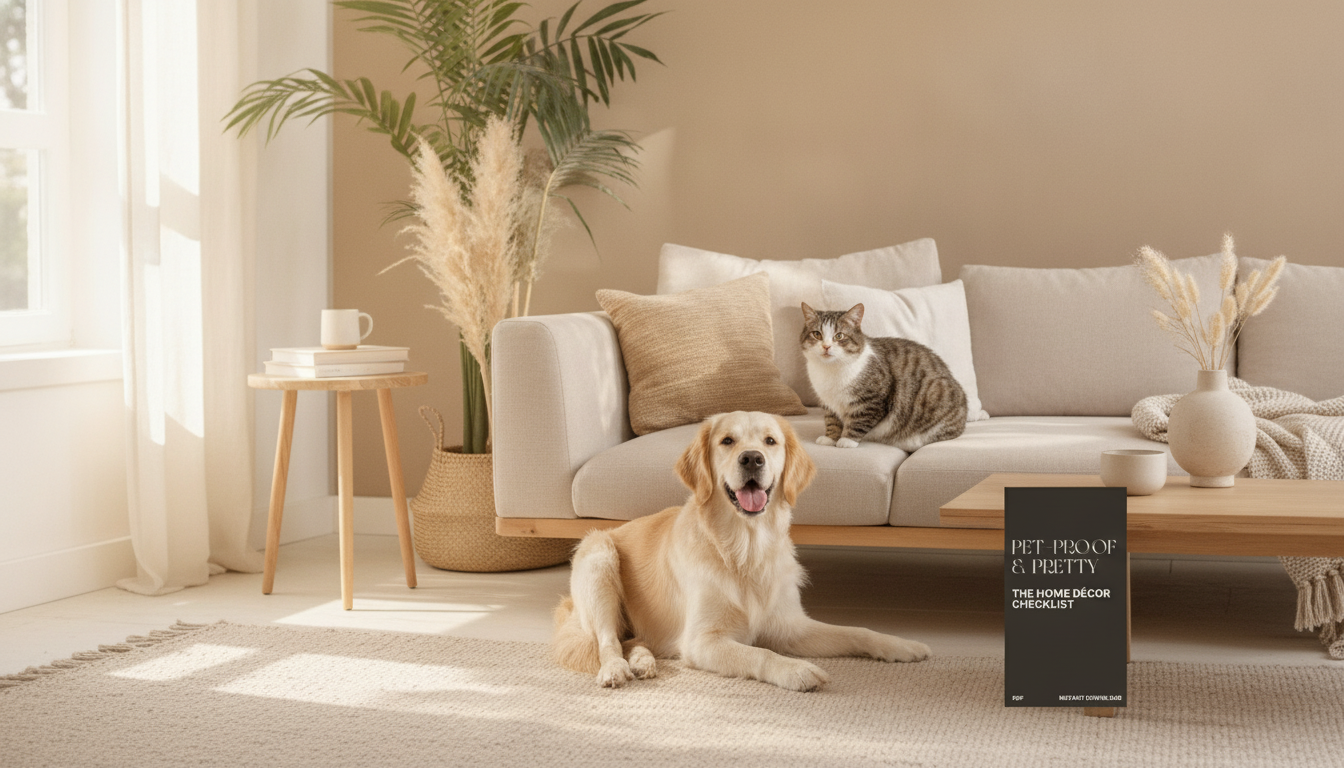
Pet-Proof & Pretty: The Home Décor Checklist (Printable Digital Download)
For other home refresh wins that play nicely with real life, consider When Stuff Takes Over Your Space: Decluttering Guide and Accent Wall Magic Checklist.
FAQ
What are the best couch materials for homes with dogs or cats?
Tight-weave performance fabrics and microfiber tend to resist snags and clean up easily, and washable slipcovers make maintenance simpler. Skip loose weaves and delicate textures in the rooms where your pets lounge the most, and choose mid-tone patterns that hide fur between cleanings.
How can décor be protected from cats that scratch furniture?
Place a scratching post or pad directly next to the scratched area and reward your cat for using it, while adding a furniture protector to the targeted corner. Keep nails trimmed, use deterrent textures on the furniture edge temporarily, and make the “right” scratching option the easiest one to reach.
Which common houseplants are unsafe for pets?
Many popular houseplants can be toxic, so it’s best to check an authoritative list (such as the ASPCA) before bringing any plant home. Avoid high-risk plants entirely when possible, or keep only verified pet-safe options placed well out of reach.
Recommended for you







Leave a comment