Natural Toy Safety Checklist for Non-Toxic, Child-Safe Playtime
A practical, quick-scan checklist helps you spot common toy hazards, reduce exposure to unwanted chemicals, and keep play areas clean and age-appropriate. Use the steps below for new purchases, hand-me-downs, and routine toy “checkups” at home or on the go—especially when younger siblings can access older kids’ toys.
Start with a 60-Second Toy Safety Scan
- Match the toy to the child’s age and abilities. Remember that “for ages 6+” toys can still end up in a toddler’s hands if siblings share a space.
- Check for small parts and weak attachments. Look for loose eyes/buttons, detachable magnets, and fragile seams—especially on plush toys, dolls, and pretend food.
- Scan for damage. Watch for sharp edges, splintering wood, cracked plastic, or peeling paint/finish.
- Confirm battery doors are secure. Batteries should be behind a compartment held shut with a screw that a child can’t open.
- Do a quick pull test. Tug cords, ribbons, straps, and glued-on elements to catch weak spots before play begins.
Non-Toxic Materials and Finishes: What to Prefer and What to Avoid
- Prefer solid wood with low-VOC, water-based finishes. Untreated wood can be fine, but inspect closely for splinters and rough edges.
- Choose natural rubber, food-grade silicone, and tightly woven organic cotton for mouthable items (teethers, dolls, sensory toys).
- Avoid strong chemical smells and “oily” residue. A sharp odor, sticky/greasy feel, or paint that flakes when rubbed are red flags for undesirable chemicals or poor-quality coatings.
- Be cautious with soft vinyl/PVC and poorly labeled plastics. When in doubt, choose simpler materials from reputable makers with clear labeling.
- Secondhand needs stricter standards. Older painted wood/metal toys and unknown coatings are higher risk—phase out anything with chipping paint or a finish you can’t identify.
Quick Material Check: Safer Picks vs. Watch-Outs
| Toy type |
Prefer |
Watch-outs |
Fast check before play |
| Wood blocks & toys |
Solid wood, smooth sanded, water-based finish |
Splinters, rough edges, peeling finish |
Run fingers along edges; rub cloth to see if residue transfers |
| Plush & fabric toys |
Tight stitching, washable fabric, embroidered details |
Loose buttons/eyes, shedding fibers |
Tug seams and attachments; check label for wash instructions |
| Teethers & chew toys |
Natural rubber or food-grade silicone |
Strong odor, surface cracking, sticky feel |
Bend and inspect for cracks; smell test; rinse before use |
| Bath toys |
Mold-resistant designs, easy to dry |
Water trapped inside, visible mildew |
Squeeze and listen for water; choose designs that open/clean or drain fully |
| Painted toys |
Durable, intact finish |
Chips, flakes, unknown age/brand |
Wipe with damp cloth; if color transfers or flakes, remove from use |
Choking, Strangulation, and Pinch-Point Hazards to Catch Early
- Assume “fits in the mouth” equals choking hazard for children under 3. If a part can fit into a small-parts tester (or looks smaller than a child’s mouth), keep it away.
- Avoid long cords, necklaces, and pull strings. Keep loops and straps short and out of sleep spaces.
- Inspect hinges and joints. Ride-ons and folding toys can pinch little fingers; supervise first uses and show kids where hands should not go.
- Store tiny items like “hardware.” Marbles, tiny figurines, coins, and magnetic pieces belong in locked or out-of-reach containers.
- When guests bring toys, run a fast check. Focus on small parts, batteries, and magnets before play begins.
Batteries, Magnets, and High-Risk Components
Cleaning and Child-Safe Toy Care (Without Overdoing It)
Secondhand and Hand-Me-Down Toys: A Safe Refresh Routine
- Check recall databases first. Before cleaning, confirm the toy hasn’t been recalled. Use the U.S. Consumer Product Safety Commission (CPSC) recall list for quick verification.
- Inspect for wear and hidden hazards. Look for cracked plastic, broken seams, loose wheels, exposed staples, and corrosion on metal parts.
- Sanitize thoughtfully. Wash what can be washed, wipe what can’t, and discard anything with persistent odor, crumbling foam, or unknown sticky coatings.
- Replace missing parts the right way. Use manufacturer-approved replacements; improvised fixes can create new hazards (sharp edges, loose pieces, choking risks).
- Retire repeat offenders. If a toy fails multiple checks (sharp edges + loose parts + unknown finish), it’s safer to let it go.
A Simple Home System: Weekly Checks, Safe Storage, and Travel Kits
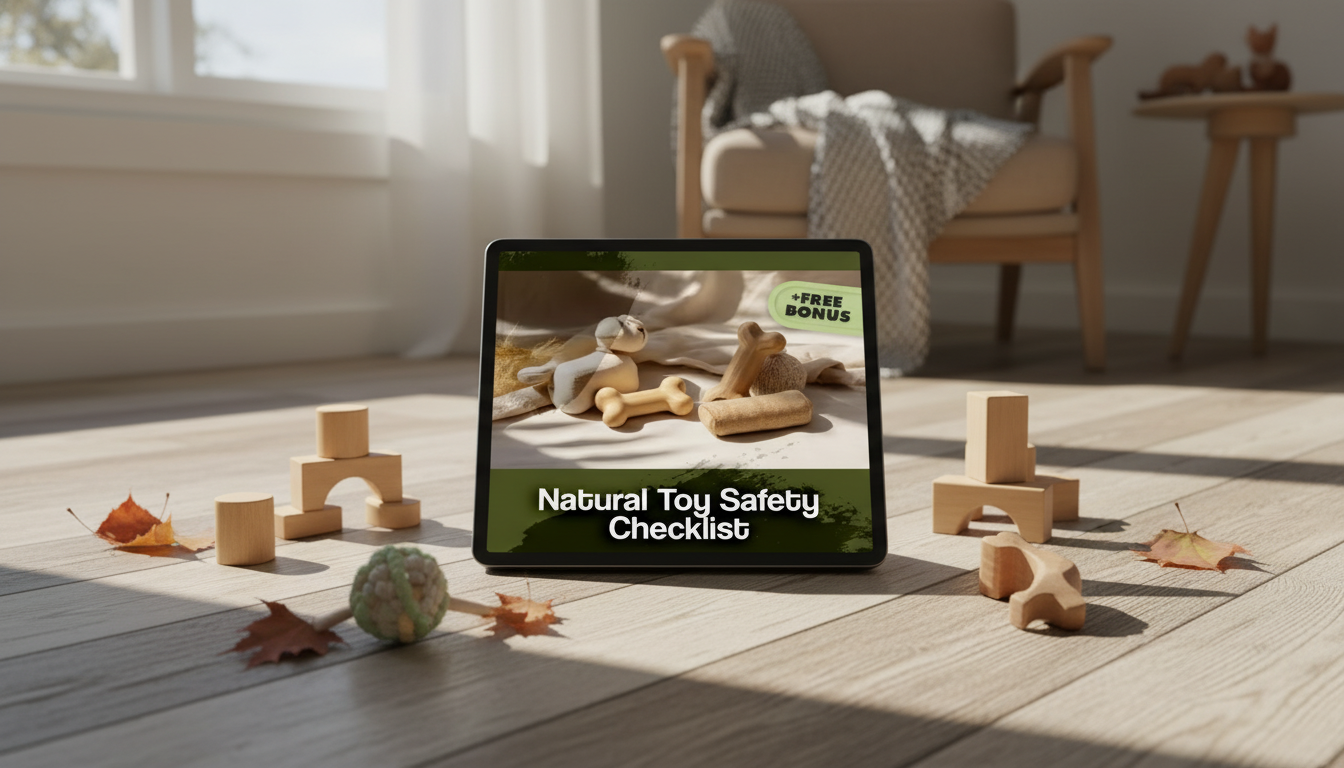
Helpful Resources and Digital Checklists
For broader guidance on toy hazards and best practices, the American Academy of Pediatrics toy safety guidance is a solid reference, and many manufacturers align with ASTM F963 toy safety standards.
FAQ
How can a toy be “non-toxic” and still be unsafe?
“Non-toxic” mainly speaks to chemical exposure, not physical risk. A low-toxin toy can still be dangerous if it has choking hazards, sharp edges, cords/loops, pinch points, unsecured batteries, or small magnets.
What should be checked first when buying secondhand toys?
Start with recalls and missing parts, then inspect for cracks, peeling paint/finish, battery compartment security, and any magnets. If a toy has unknown coatings, chipping paint, or a persistent chemical odor, it’s safest to discard it.
How often should kids’ toys be cleaned?
Clean more often for toys that go in mouths or are shared—plus after illness or playdates. For frequently handled toys, a weekly wipe-down is practical, and always follow the manufacturer’s instructions and dry fully to prevent mildew.
Recommended for you






Leave a comment