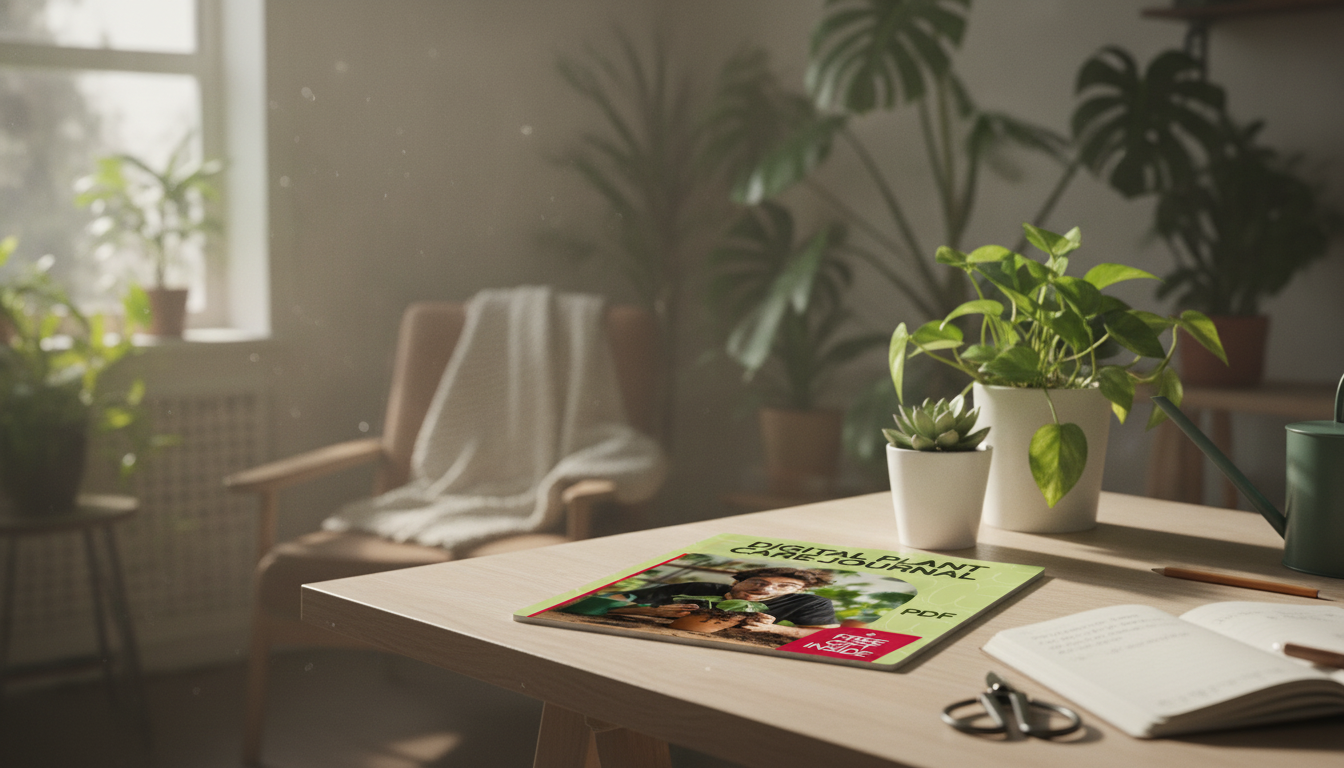
HomeBlogBlogDigital Plant Care Journal: Track Watering, Light & Growth

Digital Plant Care Journal: Track Watering, Light & Growth

Digital Plant Care Journal: Track Watering, Light & Growth

Digital Plant Care Journal for Houseplant Tracking: Watering, Growth, and Green Goals Made Simple

A plant collection thrives on consistency—yet watering schedules, light changes, and growth notes are easy to forget. A digital plant care journal creates a repeatable routine for tracking each plant’s needs, spotting patterns early, and setting realistic growth goals without relying on memory or scattered notes.

Why a plant care journal changes results

Houseplants rarely fail overnight; they usually drift off course through small, repeated mismatches—too much water “just in case,” a slow winter light drop, or fertilizer applied when growth has paused. A journal turns plant care into a simple loop: observe → record → adjust.

  • Turns plant care into a simple system: observe → record → adjust, instead of guessing week to week.
  • Prevents common issues caused by inconsistent care, such as overwatering, underwatering, and nutrient burn.
  • Creates a clear timeline for each plant (new pot, new spot, first signs of stress, new growth).
  • Makes it easier to handle a growing collection by keeping routines consistent across seasons.
  • Supports goal-setting, such as encouraging new leaves, better color, more blooms, or stronger root health.

For plant care basics and troubleshooting, these references are helpful alongside your own notes: Royal Horticultural Society houseplants guidance, University of Minnesota Extension indoor plants, and Missouri Botanical Garden resources.

What to track for each houseplant (and why it matters)

Tracking doesn’t have to be complicated. The point is to capture the small details that explain “why it’s thriving” or “why it’s struggling,” so you can repeat what works and stop what doesn’t.

  • Watering: date, amount, and method (top-water vs. bottom-water) to avoid repeating mistakes.
  • Light: window direction, distance from light source, and changes over time (especially in winter).
  • Soil and pot: mix type, drainage, pot size, and repot date to explain growth spurts or stalls.
  • Fertilizer: product, strength, and frequency to connect feeding to new growth (or stress).
  • Humidity and temperature notes: useful for tropical plants and for diagnosing crisp edges or droop.
  • Pests/disease observations: early notes on mites, fungus gnats, or leaf spotting help reduce spread.
  • Growth milestones: new leaves, nodes, height, blooms, and pruning dates to measure progress.

How to use a printable or digital journal day-to-day

The best journal is the one that’s easy to keep up with. A simple rhythm beats a “perfect” system that only gets updated twice a year.

  • Set up one page per plant: include the plant name, purchase date, location, and baseline photo.
  • Create a weekly routine: a quick check-in for soil moisture, leaf condition, and light exposure.
  • Use the journal after changes: repotting, moving to a new room, or switching watering methods.
  • Keep care notes short and consistent (a few fields filled out regularly beats long entries rarely).
  • Review monthly: scan entries for patterns like repeated yellowing after watering or slow growth in low light.
  • Adapt seasonally: add notes when indoor heating starts or daylight shifts; adjust care based on trends.

What’s inside the Digital Plant Care Journal

Digital Plant Care Journal is designed for quick logging and long-term clarity—so your collection feels manageable whether you’re caring for three plants or thirty.

  • Printable pages for a binder, clipboard, or plant care station, plus a digital-friendly format for tablets and laptops.
  • Structured tracking for watering, growth, and plant changes so entries stay consistent across your collection.
  • Checklists that turn care tasks into quick actions—helpful for busy weeks or plant-sitter handoffs.
  • A flexible system for beginners and experienced plant parents, from a few pots to a full indoor jungle.

Example tracking fields and how they help

Journal field What to record Helpful for
Watering log Date, moisture check result, amount/method Reducing overwatering and improving consistency
Light notes Window direction, distance, shade/curtain changes Preventing leggy growth and leaf scorch
Growth updates New leaves, height, blooms, pruning date Measuring progress toward growth goals
Soil & pot details Soil mix, drainage, pot size, repot date Explaining stalled growth and root issues
Fertilizer record Product, dilution, schedule Avoiding nutrient burn and supporting active growth
Health & pests Leaf symptoms, pest sightings, treatment dates Catching problems early and tracking what works

Watering goals that match real plant behavior

Many watering problems come from treating a calendar like a rulebook. Plants respond to changing light, temperature, pot size, and root growth—so the goal is to track signals and confirm them with a quick soil check.

Growth goals: turning notes into better care decisions

Simple setup: print, digital, or both

If your plant corner doubles as a living space you’re styling, a few complementary checklists can help keep the area functional and cohesive: Pet-Proof & Pretty: The Home Décor Checklist and Accent Wall Magic Checklist.

Who this journal works best for

FAQ

Is this journal printable, digital, or both?

It’s designed to work both ways: print pages for a binder or clipboard, or use the digital file on a tablet/laptop. Many plant parents use a hybrid setup—fast weekly checklists on paper and longer-term history stored digitally.

How many plants can be tracked with one journal?

As many as you’d like. The templates are reusable, so you can print or duplicate additional plant pages whenever your collection grows.

What’s the quickest way to start if there’s no time to set up a full system?

Start with one page per plant and track just three essentials: last water date + soil condition, light location, and a quick health note. Once that habit sticks, add fertilizer notes and growth goals.


Was this article helpful?

Yes No
Leave a comment
Top

Shopping cart

×