When every surface feels busy and decisions feel heavy, a full-home reset can sound impossible. A calmer approach is to declutter in small, repeatable steps that reduce stress and rebuild daily function—without chasing perfection or forcing an extreme minimalist makeover. The goal is simple: make your home easier to live in today, then set up light systems that keep it that way.
Decluttering works best when it starts with fast relief. Pick one “today win” zone—an area that changes daily life in a visible way. Good options: one kitchen countertop, the entryway floor, or the couch. That small win lowers the mental volume of the whole house.
If the mess feels emotionally loud, start with what’s least personal: wrappers, expired items, broken things, empty boxes, and packaging. That creates space without forcing big decisions.
When you’re overwhelmed, the hardest part is deciding. The 4-box method narrows your choices to four clear outcomes and prevents the “shuffle piles” loop.
Handle items once: pick it up, decide, place it. Avoid moving clutter from one surface to another. Also, cap the Relocate box at one bin per session; if it grows too big, it becomes delayed clutter with a new name. To keep momentum, place a donation bag by the door so “Donate” leaves quickly.
| If the item is… | Ask… | Action |
|---|---|---|
| Duplicated (two+ of the same tool, mug, charger) | Which one is easiest to use and in best condition? | Keep the best, donate/recycle the rest |
| Unused in the last year (non-seasonal) | Would it be worth buying again today? | If no, donate/sell |
| A “someday” project | Is there a scheduled date and needed materials? | If no date, let it go or store in one labeled project bin |
| Sentimental but boxed away | Does one photo preserve the memory just as well? | Photograph, then keep only a few favorites |
| Outgrown, expired, or broken | Is it repairable this week? | If not, recycle/trash |
A layered reset prevents you from organizing on top of chaos. Each layer creates breathing room for the next.
Clutter is closely connected to stress and attention fatigue for many people. If the home environment feels mentally “sticky,” practical steps like these can support a calmer baseline (see research summaries from the Personality and Social Psychology Bulletin and the American Psychological Association).
For additional practical organizing guidance, MedlinePlus offers an approachable overview of getting organized and reducing clutter: How to Get Organized and Reduce Clutter (MedlinePlus).
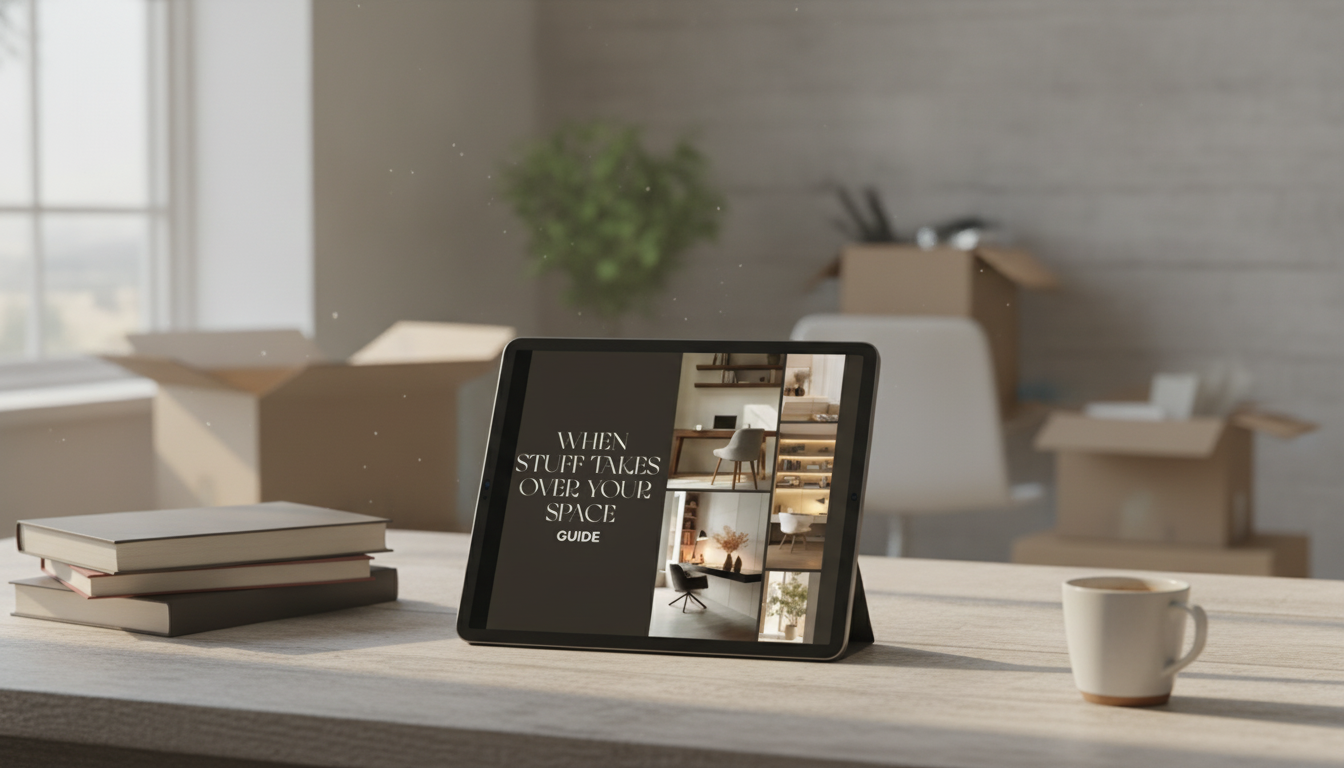
When decision fatigue is high, a structured plan can help you stop reinventing the process every time you start again. When Stuff Takes Over Your Space (digital eBook) is built around practical pacing, simple prompts, and minimalist-leaning habits that support real life—not perfection.
After the initial reset, a few lighter tools can help your space feel intentional again. If you’re trying to maintain a home that looks good with animals in the mix, Pet-Proof & Pretty: The Home Décor Checklist supports easier upkeep choices. And if you want a focused weekend win that makes a room feel refreshed without adding more stuff, Accent Wall Magic Checklist offers a step-by-step way to upgrade a wall with a clear plan.
Use smaller time blocks (5–10 minutes), start with obvious trash, and pick one “today win” zone so the task feels contained. Take breaks, hydrate, and stop before you spiral; if distress feels severe or unsafe, consider reaching out to a mental health professional for support.
Use a container limit and keep only what fits in that defined space. Prioritize items that are costly or hard to replace and are realistically likely to be needed within the next year.
Start with shared spaces and agree on simple boundaries by zone or container. Give each person a clearly defined personal bin for items that aren’t up for debate, and set household rules for what can enter the home going forward.







Leave a comment