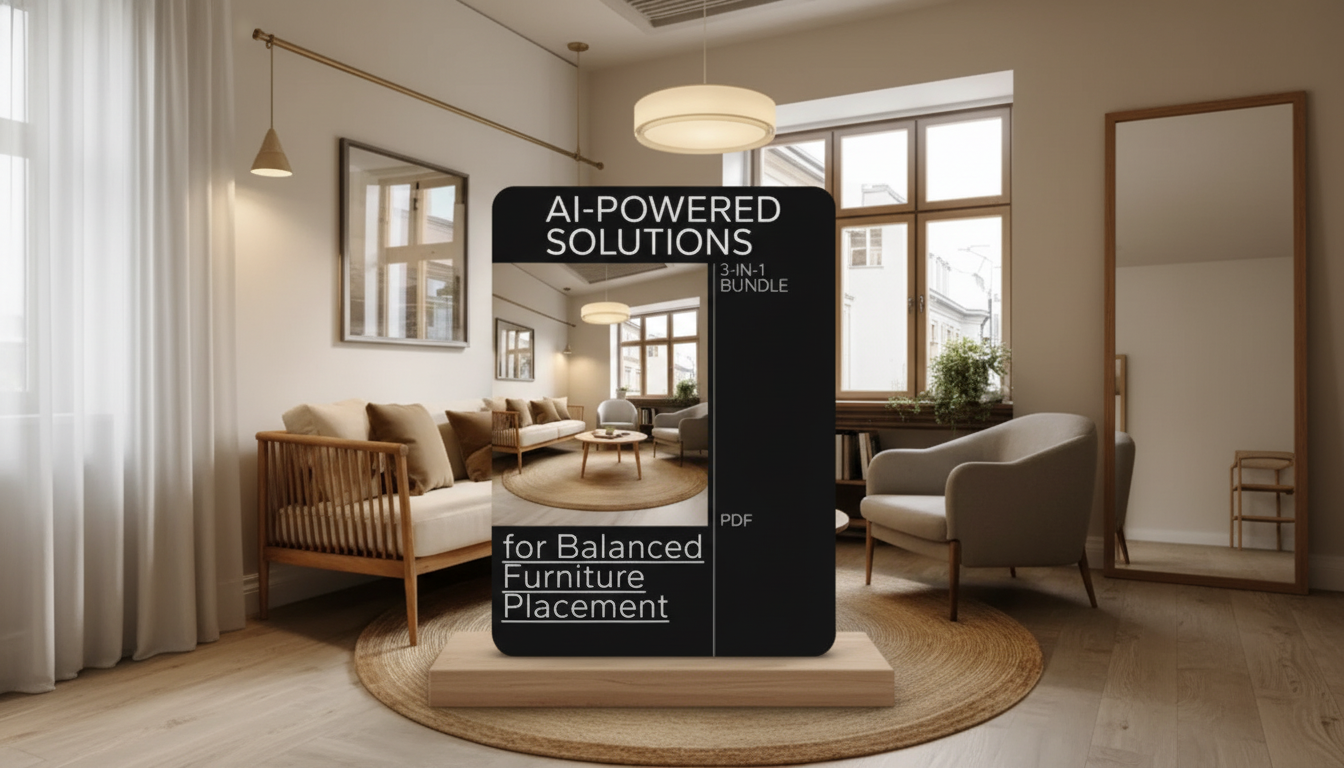
Balanced furniture placement is the difference between a room that looks good in photos and a room that feels effortless to live in. This bundle focuses on clear steps—supported by AI-assisted layout thinking—to help create better flow, stronger focal points, and comfortable spacing without guesswork.
If you’re ready to stop shoving things around and hoping it works, start with the AI-Powered Solutions for Balanced Furniture Placement | 3-in-1 Bundle of Guides, eBooks, and Checklists and use its frameworks to make confident decisions before you lift a sofa or buy a new rug.
“Balanced” doesn’t mean perfectly symmetrical or minimal—it means the room supports everyday life while looking intentional from multiple angles. A few markers show up again and again in layouts that feel easy:
A practical way to sanity-check balance is to do a quick “walk and sit” test: walk the main routes without turning sideways, then sit where people will sit most often and notice what feels awkward (glare, blocked views, hard-to-reach tables, tight clearances).
AI-assisted layout tools are most useful when they speed up the boring parts—measuring, testing, and spotting problems—so you can spend energy on style choices that make the room feel like yours.
For clearance reference—especially in tight spaces—reviewing the ADA Standards for Accessible Design can be helpful as a reality check for turning space and pass-through comfort, even in homes that don’t require compliance.
The bundle is built to move you from “Where do I start?” to “This layout works” with fewer false starts. Instead of relying on intuition alone, you get repeatable steps and quick validations.
| Component | Best for | When to use |
|---|---|---|
| Guides | Learning the rules of balance and flow | Before planning a new layout or buying key pieces |
| eBooks | Room-specific layout frameworks | When working through living rooms, bedrooms, or multi-use spaces |
| Checklists | Fast validation of spacing and placement | Right before final positioning, styling, and minor tweaks |
Getting to a functional layout quickly is usually about sequence. When the big decisions happen first, the finishing details are easier (and less expensive) later.
If the room must double as a pet-friendly space, pair the layout process with Pet-Proof & Pretty: The Home Décor Checklist to keep fabrics, finishes, and daily-cleanup zones aligned with where people actually walk and lounge.
When your focal point is a feature wall, use Accent Wall Magic Checklist alongside the layout plan so furniture alignment, art height, and lighting work together instead of competing.
For a broader look at circulation and space planning concepts, the GSA Facilities Standards is a useful reference point for how professionals think about clearances, planning, and constraints.
To get started, use the AI-Powered Solutions for Balanced Furniture Placement | 3-in-1 Bundle of Guides, eBooks, and Checklists to build two or three layouts on paper first—then move only what you’re confident will earn its place.
Yes—these rooms often benefit most when accurate measurements and constraints are included. Document door swings, windows, and circulation first so layout suggestions stay realistic and livable.
At minimum: room length and width, door and window locations, and the dimensions of major furniture pieces. Ceiling height and fixed obstacles (radiators, vents, columns, built-ins) also help prevent scale and clearance mistakes.
Yes. They prompt pathway checks, seating distances, and zone sizing so you can confirm scale and clearance before you purchase a new sofa, bed, or table.





Leave a comment