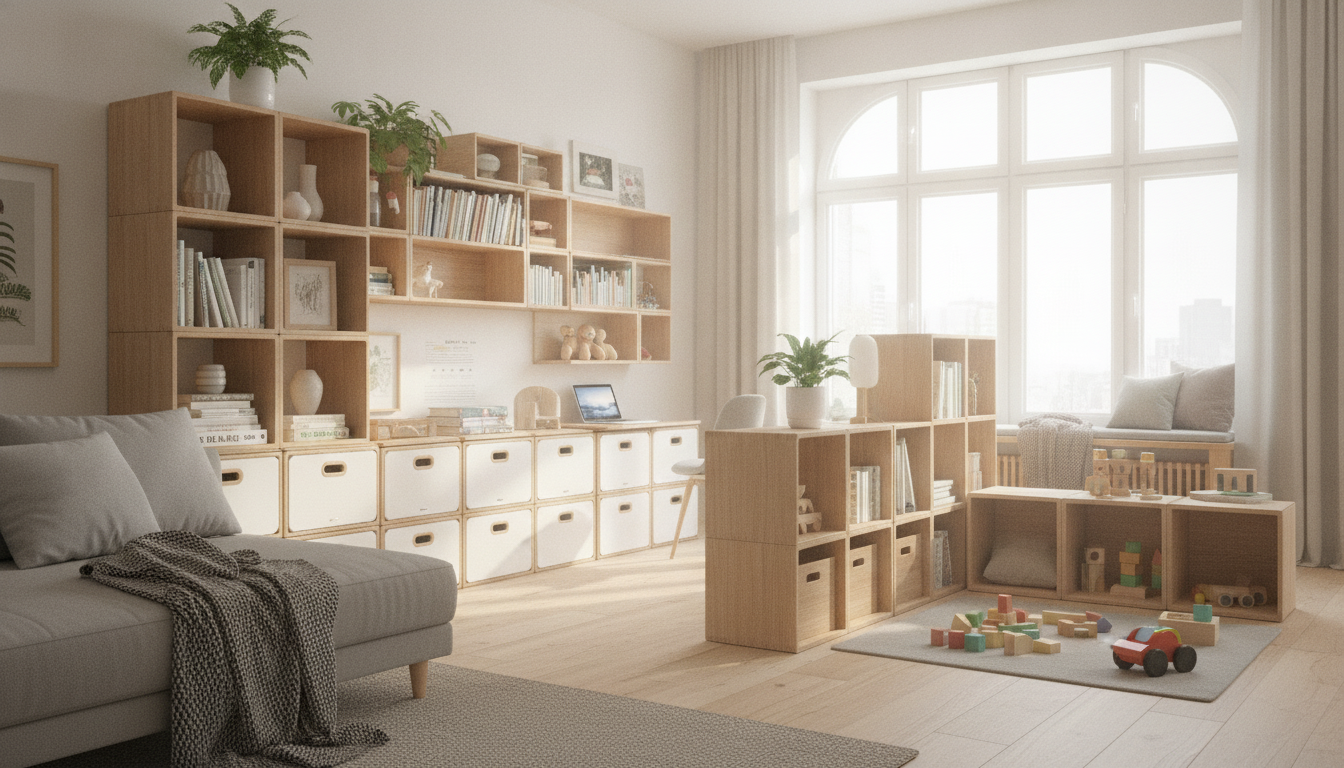
Modular storage turns clutter into flexible zones that can evolve with routines, layouts, and seasons. Instead of forcing your life to fit a single dresser, cabinet, or bookshelf, you build a system from repeatable pieces—shelves, drawers, doors, bins, and rails—that can shift as your needs change. With a few reliable steps (measure, map zones, pick module types, and style the visible pieces), any room can feel calmer while staying practical for real life. For more guidance, see Modular Furniture Design by Using Intelligent Platform and Wireless ….
Traditional furniture is often “one-and-done”: it looks great until your routines change, then it becomes the wrong size or shape for the job. Modular systems are designed to flex. For further reading, see [PDF] Workplace Design Guidelines – DC DGS.
Before buying anything, do a fast audit so your modules match the room’s constraints and your daily patterns.
If you want a simple checklist you can reuse room to room, the How to Use Modular Storage in Rooms (Digital Guide) lays out a step-by-step plan for measuring, zoning, and choosing module mixes that still look styled.
The best modular setups use a blend of access levels: some “grab-and-go,” some “tidy-but-hidden.”
| Need | Best modules | Container tips | Placement notes |
|---|---|---|---|
| Entry drop zone (keys, bags, shoes) | Wall hooks/rail + closed shoe cabinet + small tray | One catchall bin per person | Keep within arm’s reach of the door; avoid blocking swing paths |
| Work/Study supplies | Drawers + vertical file + open shelf for reference | Label by task (bills, school, projects) | Put daily items between waist and eye level |
| Kids’ toys and crafts | Cubes + bins + one closed cabinet | Picture labels for quick cleanup | Rotate toys seasonally to reduce overflow |
| Living room media + games | Low console + drawers + lidded baskets | Cable box/bin to hide cords | Leave ventilation space for devices |
| Bedroom clothing overflow | Drawer modules + shelf tower | Use dividers for socks/underwear | Keep “out of season” higher or in under-bed bins |
| Pantry/backstock | Adjustable shelves + clear bins | Group by meal type (snacks, baking, breakfast) | Heaviest items on lower shelves |
Organizing by “category” helps, but organizing by behavior keeps systems working when you’re tired, busy, or distracted.
For more ideas on building simple, sustainable routines, resources from the National Association of Productivity & Organizing Professionals (NAPO) are a solid reference point.
Combine wall hooks with a narrow closed unit so shoes, leashes, and reusable bags don’t sprawl. Add a slim shelf for mail and a tray for keys. If pets are part of the traffic pattern, the Pet-Proof & Pretty: The Home Décor Checklist can help you choose surfaces and placements that stay neat without feeling fragile.
Group storage by routine: breakfast, lunch prep, snacks, baking. Clear bins make inventory visible, which can reduce accidental overbuying. For more pantry and kitchen organization ideas, browse the practical room-by-room guidance on The Spruce’s Home Organization hub.
If your storage wall is becoming a design focal point, a bold backdrop can make the whole setup feel custom. The Accent Wall Magic Checklist is a quick planning tool for choosing placement, color, and finish so the wall supports the storage (instead of competing with it).
Prioritize vertical modules and wall-mounted pieces to free floor space, and use a higher ratio of closed storage so the room feels visually calm. Keep daily items in the waist-to-eye “golden zone” and protect clear pathways first.
Closed doors and drawers are best for mixed, visually busy items, while open shelving works best for a limited, curated display. If you use open shelves, keep baskets and bins uniform so the surface reads as intentional.
Build zones around routines, leave 10–15% empty capacity in each area, and label containers so items return quickly. A weekly reset of one catchall “inbox” bin prevents clutter from migrating across rooms.
I just like the helpful information you provide in your articles
I like the efforts you have put in this, regards for all the great content.
There is definately a lot to find out about this subject. I like all the points you made
This is really interesting, You’re a very skilled blogger. I’ve joined your feed and look forward to seeking more of your magnificent post. Also, I’ve shared your site in my social networks!
I am truly thankful to the owner of this web site who has shared this fantastic piece of writing at at this place.
Great information shared.. really enjoyed reading this post thank you author for sharing this post .. appreciated
This is my first time pay a quick visit at here and i am really happy to read everthing at one place
I really appreciated helpful details I had not seen elsewhere during my research and I look forward to reading more from you



Leave a comment