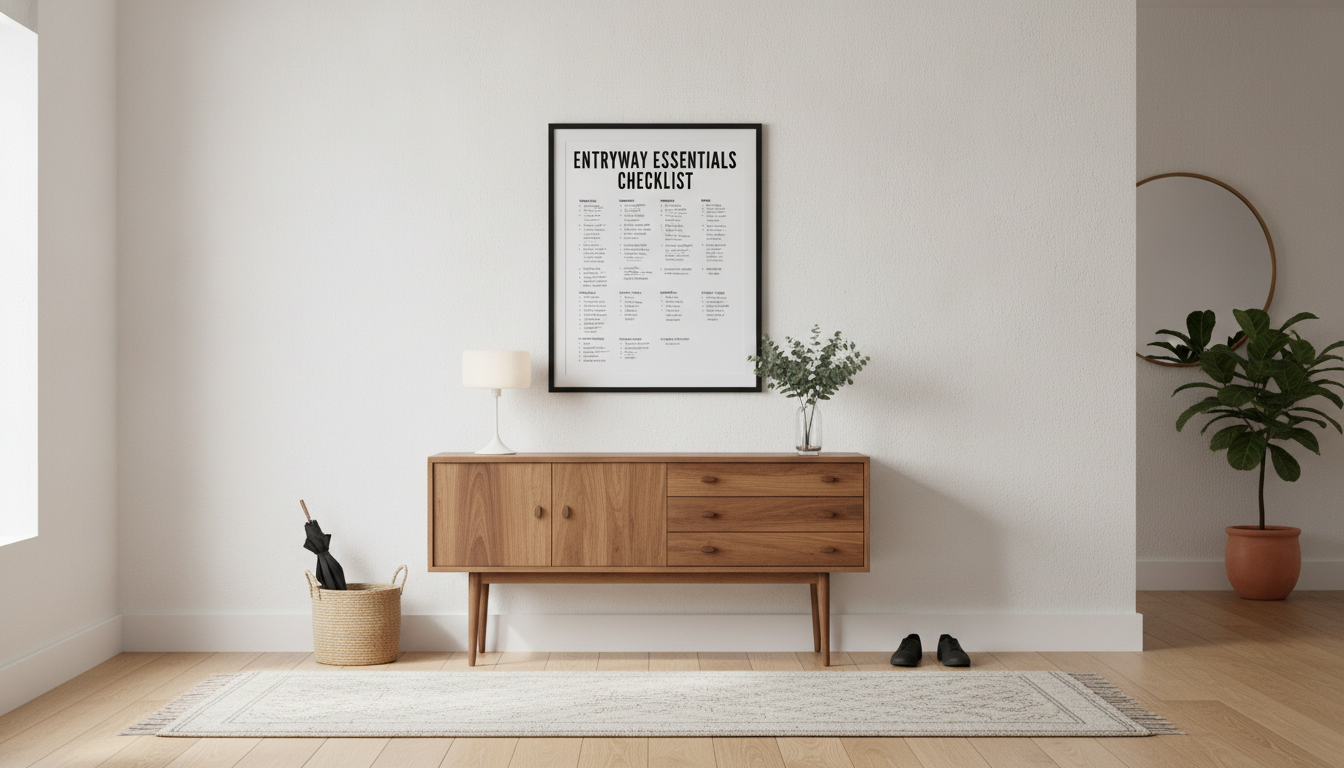
A calm entryway makes the whole home feel easier to run. When shoes, bags, keys, and mail have one obvious place to go, the rest of the day tends to start (and end) with less friction. Use this entryway essentials checklist to build a minimalist “drop zone” that stays functional, clean, and welcoming—even when everyone walks in at once. For more guidance, see [PDF] Everyday Chic My Secrets For Entertaining Organiz – extnag.tacc ….
A working entryway isn’t about filling the space; it’s about reducing decisions. Prioritize function first: a clear walking path, a landing spot for small items, and quick access to the essentials used every single day. For further reading, see 8 Organized Entryway Essentials – Abby Lawson.
Before buying anything, take a fast “flow audit.” Minimalist setups work best when they match real behavior—where shoes actually land, where bags actually drop, and where paper piles up.
| Zone | Purpose | Essentials to include | Minimalist tip |
|---|---|---|---|
| Landing spot | Drop small items immediately | Tray, small bowl, wall pocket, slim shelf | Limit to one container; clear weekly |
| Outerwear | Store jackets and bags | Hooks, rail, slim closet, hangers | Cap hooks to a set number (e.g., 5–7) |
| Shoes | Contain footwear clutter | Shoe rack, baskets, mat, boot tray | Keep only in-season pairs at the door |
| Mail & papers | Prevent pileups | Sorter, file folder, recycling bin nearby | “Decide at the door”: shred/file/toss immediately |
| Exit-ready | Support leaving on time | Mirror, lint roller, umbrella stand, charger | Keep a small checklist on the inside of the door |
Think in categories rather than furniture. You can build an entryway with a shelf and two hooks just as easily as with a full console—if the categories are covered.
For routine cleaning and disinfecting guidance in high-touch areas, follow the CDC’s recommendations: CDC: Cleaning and Disinfecting Your Facility. For a broader safety scan of the home (including entry points), the U.S. Fire Administration’s checklist is a helpful reference: U.S. Fire Administration: Home Fire Safety Checklist.
Minimalist entryways feel restful when surfaces stay clear and the visual “story” is consistent. Aim for practical beauty—items that look good because they work.
Start with the highest-impact basics: a landing spot for keys/wallet, a simple shoe solution, and a few hooks for coats and bags. Add a single mail inbox next to stop paper piles before they start.
Set hard limits by category (a fixed number of hooks, only in-season shoes at the door) and assign one small basket or hook per person. A 60-second nightly reset keeps overflow from becoming a weekend project.
US Letter (8.5″ x 11″) is the easiest for home printers, and A4 compatibility is helpful if you print elsewhere. Print single-sided for a binder or clipboard, and use slightly heavier paper for a copy you’ll post near the entry.



Leave a comment