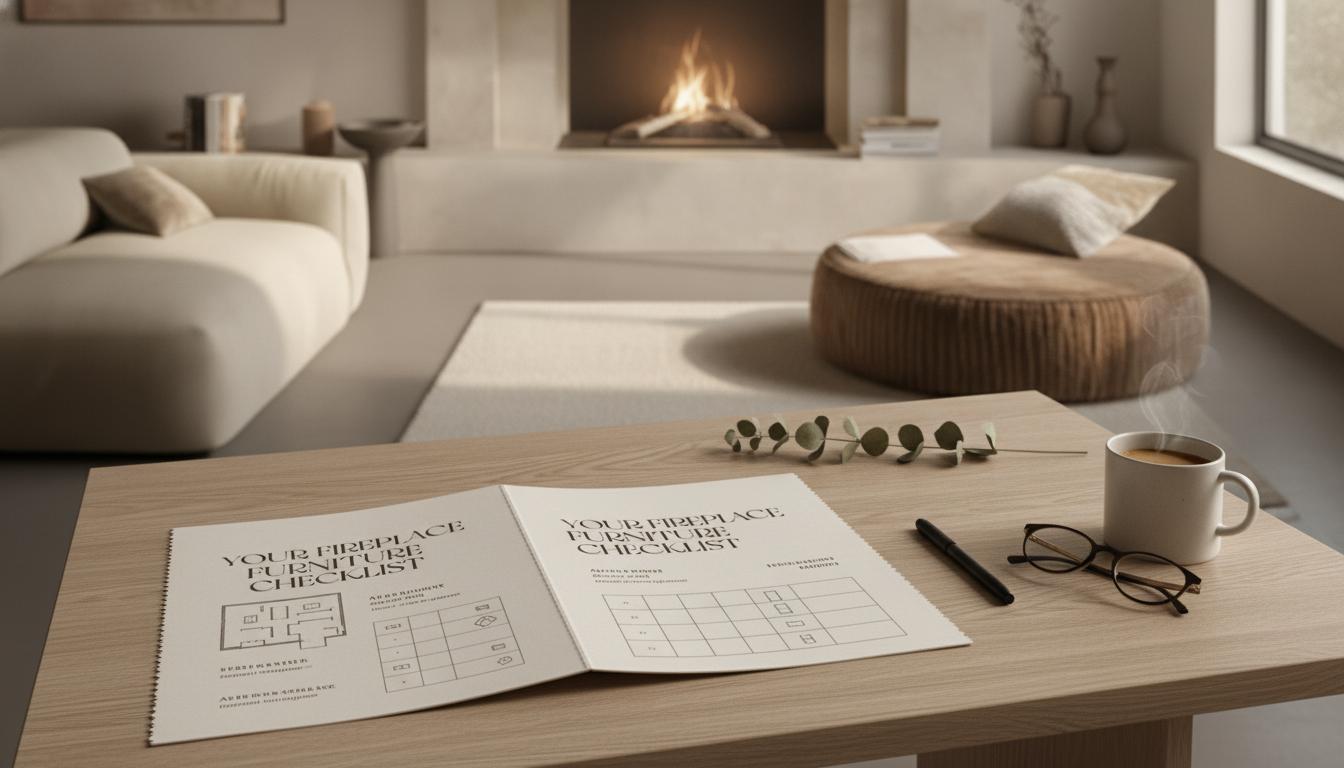
A fireplace naturally becomes the focal point of a living room, but arranging seating, tables, lighting, and décor around it can feel tricky—especially when traffic flow, TV placement, and comfort all compete for space. Use this step-by-step checklist approach to map your layout, choose the right furniture scale, and create a cozy zone that works year-round.
Before moving furniture, get clear on what the room must do. A fireplace layout feels “right” when it respects pathways, heat safety, and how you actually live.
If you want a quick, repeatable way to capture measurements, seating needs, and a final pass/fail scan, use Your Fireplace Furniture Checklist printable to plan before you lift a single heavy piece.
The best fireplace layout isn’t one-size-fits-all—it’s the one that fits your room’s proportions and how you move through the space.
| Room situation | Best starting layout | Key move |
|---|---|---|
| Tight space with one clear wall | Loveseat + 2 chairs (angled) | Choose armless/low-profile chairs to keep sightlines open |
| Large square room | Sofa facing fireplace + chairs opposite (U-shape) | Center a substantial rug to hold the group together |
| Rectangular room with multiple doors | Floating sofa + two chairs (L-shape) | Prioritize a clean traffic lane behind the sofa |
| Open concept | Sectional or sofa with console behind | Use a console table to define the zone and add lighting |
A fireplace conversation area should feel close enough for connection, with enough breathing room to move naturally.
When the distances feel off, the fix is usually simpler than buying a new sofa: shift the rug forward, swap a bulky coffee table for nesting tables, or rotate a chair inward to reduce “dead space” between seats.
If your TV wall still feels unfinished, consider a focused, step-by-step plan like the Accent Wall Magic checklist to bring both elements into one cohesive look (without adding clutter around the firebox).
Homes with pets benefit from “cozy that cleans up fast”: durable textiles, easy-to-move accent tables, and a defined basket or lidded storage spot for toys and throws. For a practical, room-by-room approach, keep Pet-Proof & Pretty: The Home Décor Checklist on hand while you style.
| Item | Check | Notes |
|---|---|---|
| Main seating placed to face/angle toward fireplace | □ | |
| Clear traffic path preserved | □ | |
| Rug anchors the seating group | □ | |
| Coffee/side table within reach of every seat | □ | |
| Lighting layered (overhead + task + accent) | □ | |
| Heat-safe clearance maintained | □ |
For a simple, done-for-you planning sheet you can reuse every time you rearrange, grab Your Fireplace Furniture Checklist printable and keep it with your home folder.
If the fireplace is the primary focal point, place the sofa facing it or slightly angled toward it. When the room also needs TV flexibility or a major walkway, use an L-shape arrangement, a sectional with a chaise, or swivel chairs to keep the fireplace as the “home base” without forcing rigid seating.
Angle the main seating to face the corner and float pieces as needed so the group feels centered on the fireplace, not the walls. Add one or two chairs to form an L or U, keep a clear path behind seating, and use a rug to visually “square up” the conversation area.
Measure the room and tape out furniture footprints on the floor, then try a few standard setups (face-to-fireplace, L-shape, U-shape) before committing. A quick checklist pass for traffic flow, reachable surfaces, and lighting will confirm whether the arrangement will hold up day to day.






Leave a comment