
Craft supplies multiply fast—paper stacks, tools, ribbons, beads, yarn, paints, and half-finished projects. A clear checklist-based system makes it easier to find what’s needed, buy less duplicate inventory, and actually enjoy making. Below is a practical, repeatable method to sort, store, label, and maintain craft and hobby supplies—plus a printable checklist option to keep momentum when motivation dips.
A checklist approach turns “organize everything” into a series of small, repeatable decisions. Instead of relying on memory (or a random pile), it creates a simple system you can maintain even after a busy week.
Before sorting, decide where things will land. Zones prevent the classic problem of beautifully sorted items that still don’t have a stable home.
Safety note: store heavy items low and stack with care. OSHA’s basic guidance on safe storage and handling is a helpful reference for preventing tip-overs and strain injuries in any storage area (OSHA – Warehousing).
Sorting by the “old location” reinforces clutter patterns. Sorting by use makes it easier to grab what you need and to reset quickly.
| Category | Daily reach | Store together | Common mistake to avoid |
|---|---|---|---|
| Paper (cardstock, scraps, pads) | Current colors/projects, cutting mats | Scraps by size; pads upright | Mixing scraps with full sheets |
| Adhesives (glue, tape, sprays) | Most-used glue/tape | Refills and specialty adhesives | Letting old glue expire unnoticed |
| Cutting tools (scissors, blades) | One primary set | Replacement blades, specialty cutters | Storing blades loose without protection |
| Paint/ink (acrylic, watercolor, markers) | Favorite palette/markers | Backstock by type, then color | Storing markers horizontally when manufacturer says vertical |
| Fabric/yarn | Current project skeins/fat quarters | Backstock by fiber/weight or fabric type | Splitting one project across multiple locations |
Containers aren’t the first step—but the right ones keep your system from collapsing later.
If you store paints, sprays, or solvents, review disposal rules for hazardous household materials in your area (EPA – Household Hazardous Waste).
For wipes, high-touch areas, and general cleanup habits—especially if multiple people use the craft space—basic cleaning guidance can help you keep things tidy without overcomplicating it (CDC – Cleaning and Disinfecting).
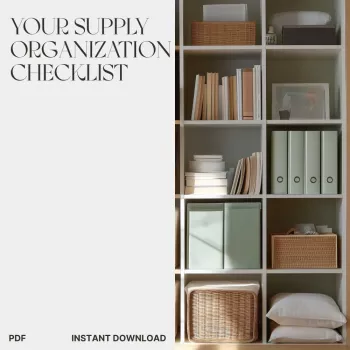
If you like having a simple step-by-step you can reuse, a printable can prevent “half-organized” stalls. Your Supply Organization Checklist (printable digital download) is designed to guide a full reset (zones, sorting, containers, labels, and maintenance) and then serve as a monthly or seasonal refresh sheet.
For other home organization projects that benefit from the same “checklist makes it doable” approach, consider Pet-Proof & Pretty: The Home Décor Checklist and Accent Wall Magic Checklist.
Work in short sessions: set up zones first, then sort into broad categories without overthinking. Use a dedicated “project parking” bin so in-progress work stays protected, and add simple labels so resets take minutes instead of hours.
Sort scraps by size (full sheets, half sheets, small scraps) and set a minimum size worth keeping. Store them upright in files, envelopes, or magazine holders, and only keep what fits in the one container you assigned for scraps.
A quick 10-minute monthly review is usually enough to toss dried-out consumables, spot refills, and clear overflow. Do a deeper seasonal review to check for expired adhesives/paints and to reduce duplicate tools that never get used.




Leave a comment