Open shelves can look airy and intentional—or quickly feel cluttered and dusty. A minimalist approach keeps everyday items accessible while still feeling calm and cohesive. The key is to combine practical storage (so items stay easy to find) with simple styling rules (so the shelf reads as a curated vignette). Use the steps below to edit what’s displayed, group by function, choose containers that hide visual noise, and keep the arrangement looking “done” with a low-effort maintenance routine. For more guidance, see How To Decorate Your Shelves for a Minimalist Look.
Minimalist shelf styling starts before you “decorate.” First, clear the decks so you can make decisions item-by-item instead of shuffling clutter into new piles.
For straightforward cleaning guidance (especially for high-touch areas), the CDC’s home cleaning recommendations are a helpful baseline for routines and product choices.
Open shelves feel most peaceful when each level has a “job.” Mixing display pieces, daily essentials, and overflow storage on every shelf is what creates that scattered look.
| Area | Best for | Keep it minimalist by |
|---|---|---|
| Kitchen open shelves | Everyday plates, bowls, glasses, a few display pieces | Using a tight color palette and matching container shapes |
| Living room shelves | Books, framed photos, sculptural objects, plants | Leaving negative space and repeating materials (wood, ceramic, linen) |
| Bathroom shelves | Towels, toiletries, apothecary jars | Decanting into uniform bottles and hiding backups in lidded bins |
| Home office shelves | Reference books, files, tools | Using labeled boxes and one display zone for personal items |
Minimalism doesn’t have to feel stark. The difference between “curated” and “cold” is usually repetition, texture, and breathing room.
If you want inspiration without copying a “busy” look, browse classic shelf styling examples from Architectural Digest and notice how often negative space is doing the work.
Open shelving looks messy when packaging, tiny items, and random colors are all competing for attention. The fix usually isn’t more stuff—it’s fewer container types used consistently.
A useful decision rule borrowed from the KonMari Method basics: keep what supports your life right now, and store the rest out of sight so your most-used zones stay calm.
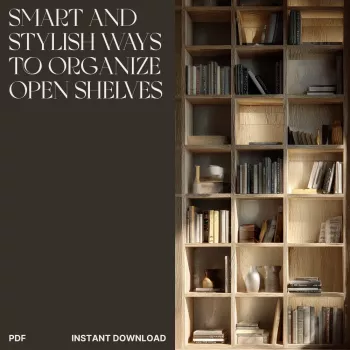
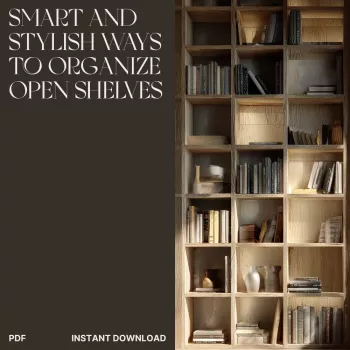
To speed up the process and avoid second-guessing, keep a shelf plan on hand and work shelf-by-shelf instead of styling the whole unit at once. The Smart & Stylish Ways to Organize Open Shelves (digital download) is designed as a ready-to-use guide with layout prompts that make the final look feel finished without overfilling.
If pets or kid-life make open shelves feel impossible, focusing on fewer, safer “display zones” helps. Pair shelf styling with a practical upkeep checklist like Pet-Proof & Pretty: The Home Décor Checklist (printable guide) to keep the look clean without constantly rearranging.
When you’re tackling a bigger refresh, a focused micro-project helps the whole space feel intentional. The Accent Wall Magic Checklist (DIY printable) pairs well with open-shelf styling because it simplifies the visual backdrop and makes your edited display stand out.
Use larger anchors like trays, baskets, or book stacks, then layer a few supporting items in a consistent color/material palette. Keeping intentional negative space and following a simple balance (like 60% functional, 30% storage, 10% décor) makes shelves look finished rather than bare.
Avoid high-visual-noise items like mixed packaging, small miscellaneous pieces, backups, cords, and anything that gets greasy or dusty quickly. Move these into lidded bins or closed cabinets so the items you see are the items you actually want to look at.
Plan for a quick weekly zone reset and a light wipe, a monthly mini-edit of one category, and a seasonal swap of one accent to keep things fresh. This schedule prevents dust buildup and stops clutter from quietly multiplying.





Leave a comment