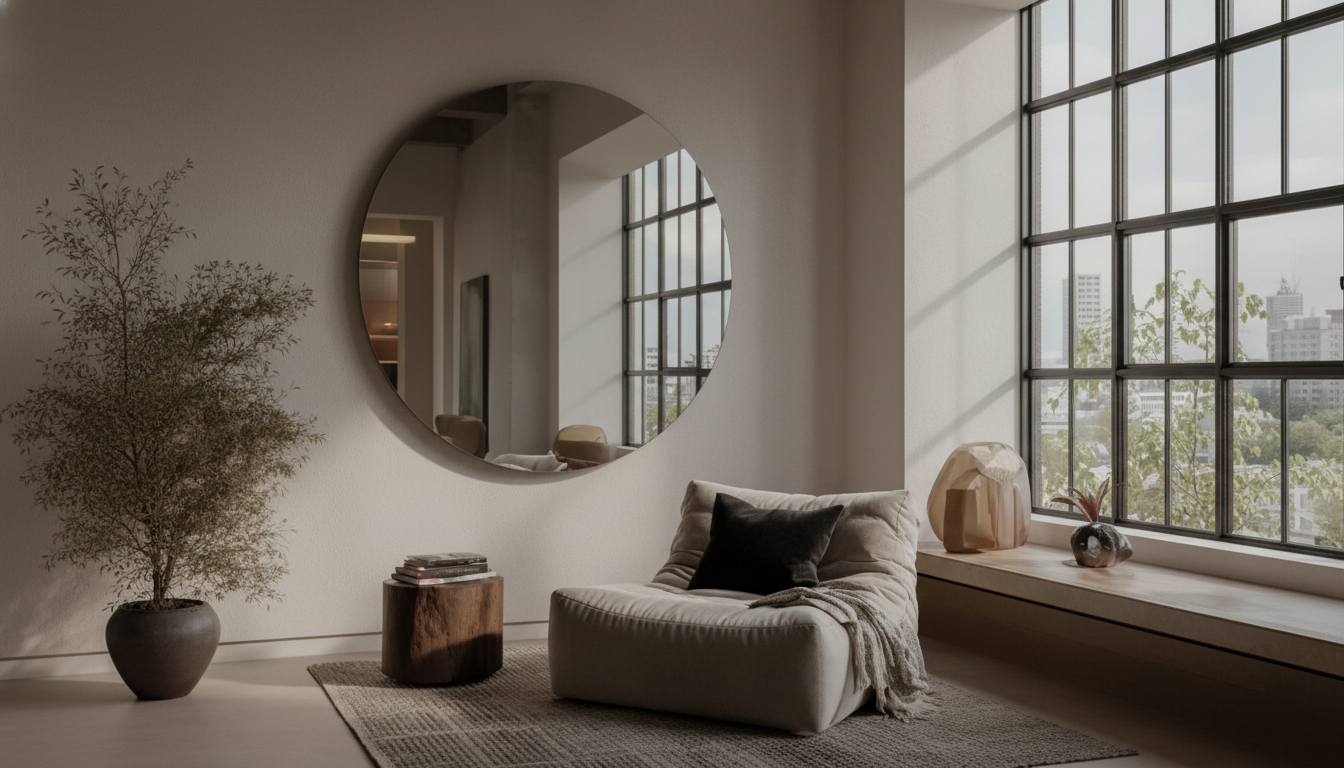
Mirrors can do more than reflect a room—they can redirect daylight, expand sightlines, and add a polished focal point without a full makeover. A few reliable “mirror moves” make decorating decisions faster: decide what you want the mirror to reflect, choose the right scale, and place it where light and traffic naturally flow. Use this checklist-style approach to get the bright, open look—without the common mistakes that make reflections feel busy or awkward.
If you’re leaning on mirrors to improve daylight, it helps to think like a lighting designer: what surface will the mirror “catch,” and where will it send that light next? The U.S. Department of Energy’s overview of daylighting explains how redirecting daylight changes comfort and visibility across a space.
Glare is the enemy of cozy reflections—especially at night. If a mirror bounces a bare bulb into your line of sight, it can feel harsh. The CIE’s explainer on what glare is is a helpful reminder: it’s not just brightness, it’s brightness in the wrong place.
Hang a mirror above a console to create a landing zone and last-look spot. Add a small lamp nearby so the reflection glows after sunset and the space feels welcoming.
For instant polish, place a statement mirror above a mantel or behind a sofa. If possible, position it to reflect a window or a piece of artwork rather than a busy walkway.
A large mirror on a side wall can amplify candlelight and chandelier sparkle. Keep what it reflects calm and cohesive—think a centered table or a clean buffet moment, not a cluttered serving station.
Place a full-length mirror where it catches daylight but doesn’t dominate the bed wall. Leaning mirrors can look relaxed and layered, especially paired with a basket or plant for softness.
| Room goal | Best mirror type | Placement tip | Common mistake to avoid |
|---|---|---|---|
| Make a small room feel bigger | One oversized mirror (rectangular or arched) | Place on a main wall to extend a clear sightline | Using several tiny mirrors that look busy |
| Brighten a dim corner | Medium-to-large mirror with light frame | Face a window or a lamp to bounce light | Reflecting glare from uncovered bulbs |
| Add a focal point | Statement round/arched mirror with bold frame | Center above furniture (console, mantel, dresser) | Hanging too high above the anchor piece |
| Improve daily function | Full-length mirror (leaning or wall-mounted) | Leave enough distance for head-to-toe view | Placing where doors collide or traffic is tight |
| Make styling feel calmer | Simple frame or frameless | Reflect a clean vignette (art, plant, lamp) | Reflecting clutter or a messy shelf |
If mirror decisions stall at “where do I even start?”, a checklist format keeps it simple: pick the reflection target, confirm height and spacing, then choose size and frame style. For a quick, repeatable process, see The Mirror Magic Checklist (digital download) for step-by-step prompts that help you plan before putting holes in the wall.
If you’re building a fuller refresh, pair mirror updates with other fast-impact projects like Accent Wall Magic Checklist, or keep your styling realistic for real life with Pet-Proof & Pretty: The Home Décor Checklist.
Place a mirror opposite or adjacent to a window so it can bounce daylight deeper into the room. If natural light is limited, position it near a lamp for a “double light” effect, and avoid reflecting bare bulbs that create glare.
Usually, one large mirror creates stronger perceived depth and looks calmer on the wall. Multiple small mirrors can work when they’re aligned and styled as a deliberate gallery feature rather than scattered.
Choose a reflection that feels like a highlight: a window view, artwork, greenery, or a clean vignette on a console. Skip angles that duplicate clutter, busy countertops, or harsh light sources.





Leave a comment